

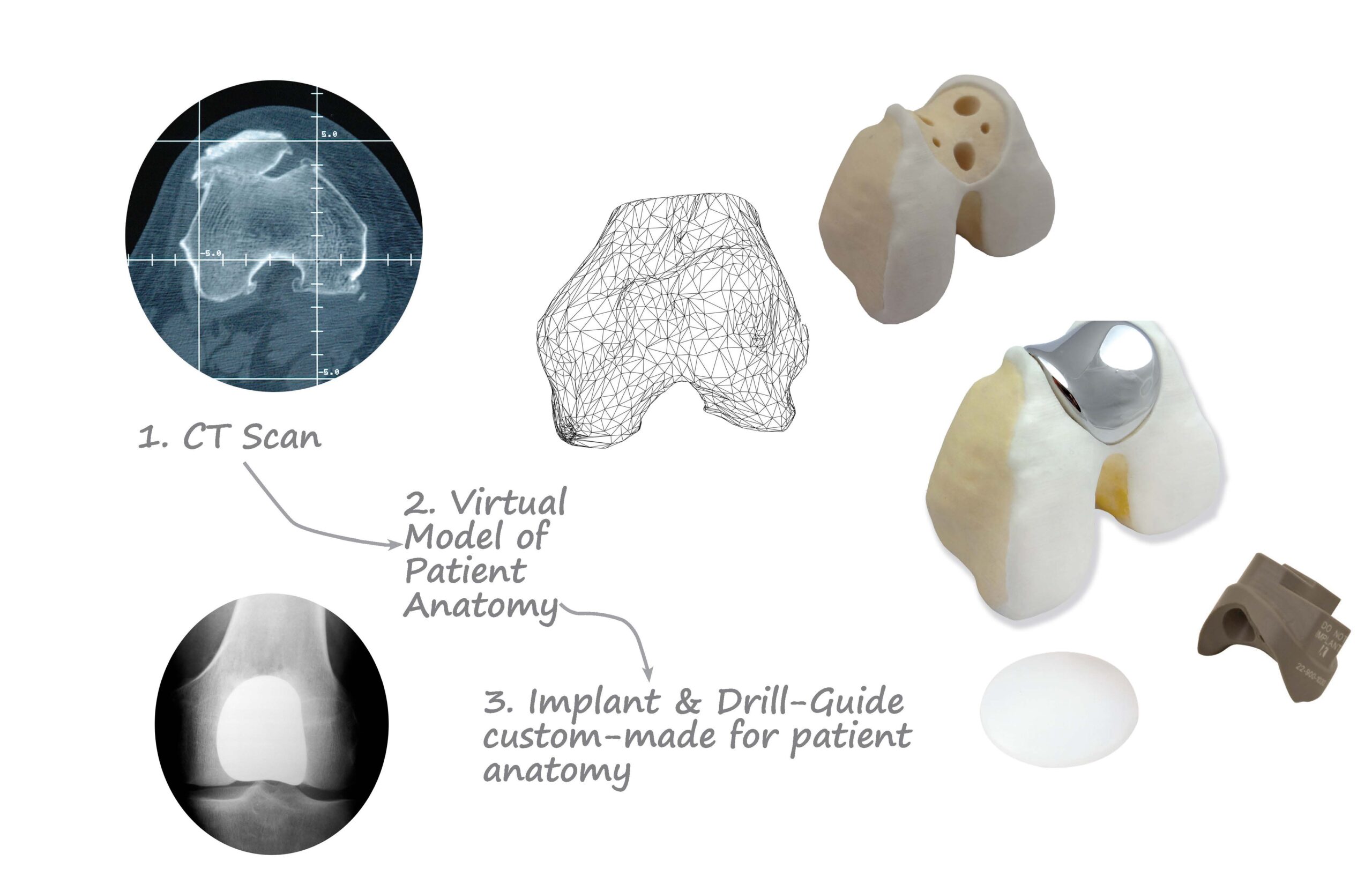
Patient-specific design is reshaping the way surgeons approach patellofemoral arthroplasty (PFA). A recent publication by Erik Haneberg, BS, Andrew Phillips, BA, Josh Wright-Chisem, MD, and Adam Yanke, MD, PhD, explores how custom implants and instrumentation can better match a patient’s native anatomy, improving precision and patellar tracking.
Unlike traditional inlay and onlay systems, patient-specific implants are developed using advanced imaging and 3D modeling. This allows for more accurate component placement while minimizing bone removal, an especially important advantage in patients with complex or dysplastic anatomy.
Early outcomes are promising, with strong implant survivorship and meaningful improvements in patient-reported function. But the real value of this approach is best seen in practice.
The accompanying video provides a step-by-step look at the procedure, including implant design, surgical technique, and postoperative results. We encourage you to review the full article and watch the video here.